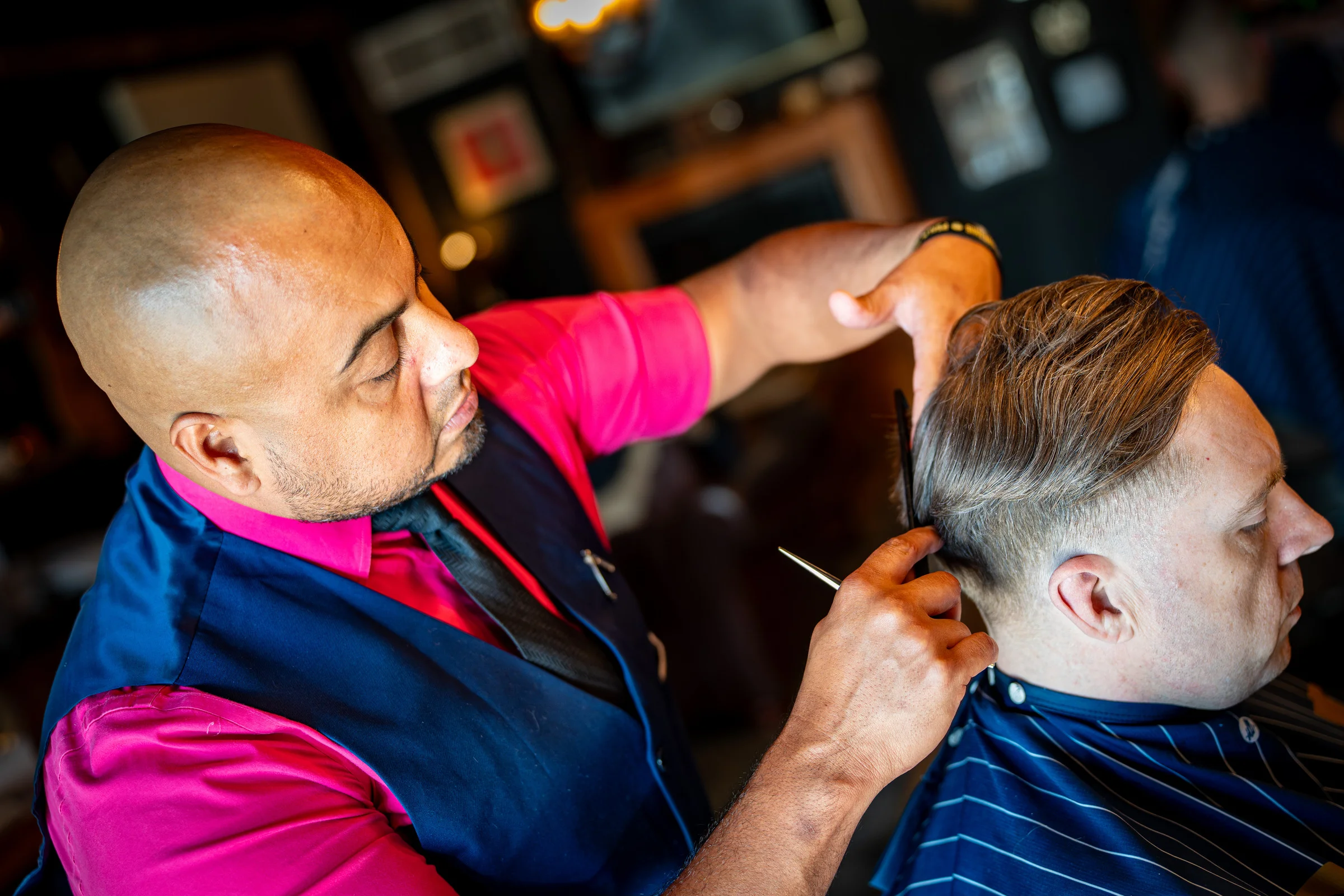
You leave the house with your hair exactly right. By the time you have parked and walked down Main Street, it has gone flat on top and fuzzy at the sides. Nothing you did was wrong. You just styled your hair for a room and then took it outside into Florida.
The National Weather Service’s Tampa Bay office has kept dew point records since 1948. The highest it has ever measured was 86°F on August 6, 2000, and in August 2024 the dew point stayed at or above 75°F for seven straight days. Hair has to live in that. Here is why it struggles, and the cuts that hold up anyway.
Why humidity undoes a style
The short version is chemistry, and it is worth two minutes because it explains everything else in this article.
Hair holds its shape partly through weak attractions between the protein chains inside each strand. In an explainer for Scientific American, chemist Tara S. Carpenter describes it this way: “Heating or wetting your hair breaks the magnetlike attraction between these rows of proteins.” Those are hydrogen bonds, and “water is one of the best molecules at hydrogen bonding.”
That is why a blow-dry works at all. Heat breaks those bonds, and they set again in whatever shape the hair cools in. It is also why a blow-dry does not last here. Humid air puts water back into the strand, and “water can form hydrogen bonds between the rows of proteins in your hair’s cortex,” pulling the hair back toward its natural shape, or into frizz.
There is a second, very Florida problem in the same article: “styling your hair under high humidity and then entering a less humid environment can also be an issue.” That is a summer day here in one sentence. Soup outside, air conditioning inside, and back again, several times before lunch.
So a style that depends on being forced into shape loses every time. A cut that is shaped to look good in your hair’s natural state does not have that problem.
The cuts that survive a Gulf coast summer
None of these is new. They work because they ask the least of your hair in wet air.
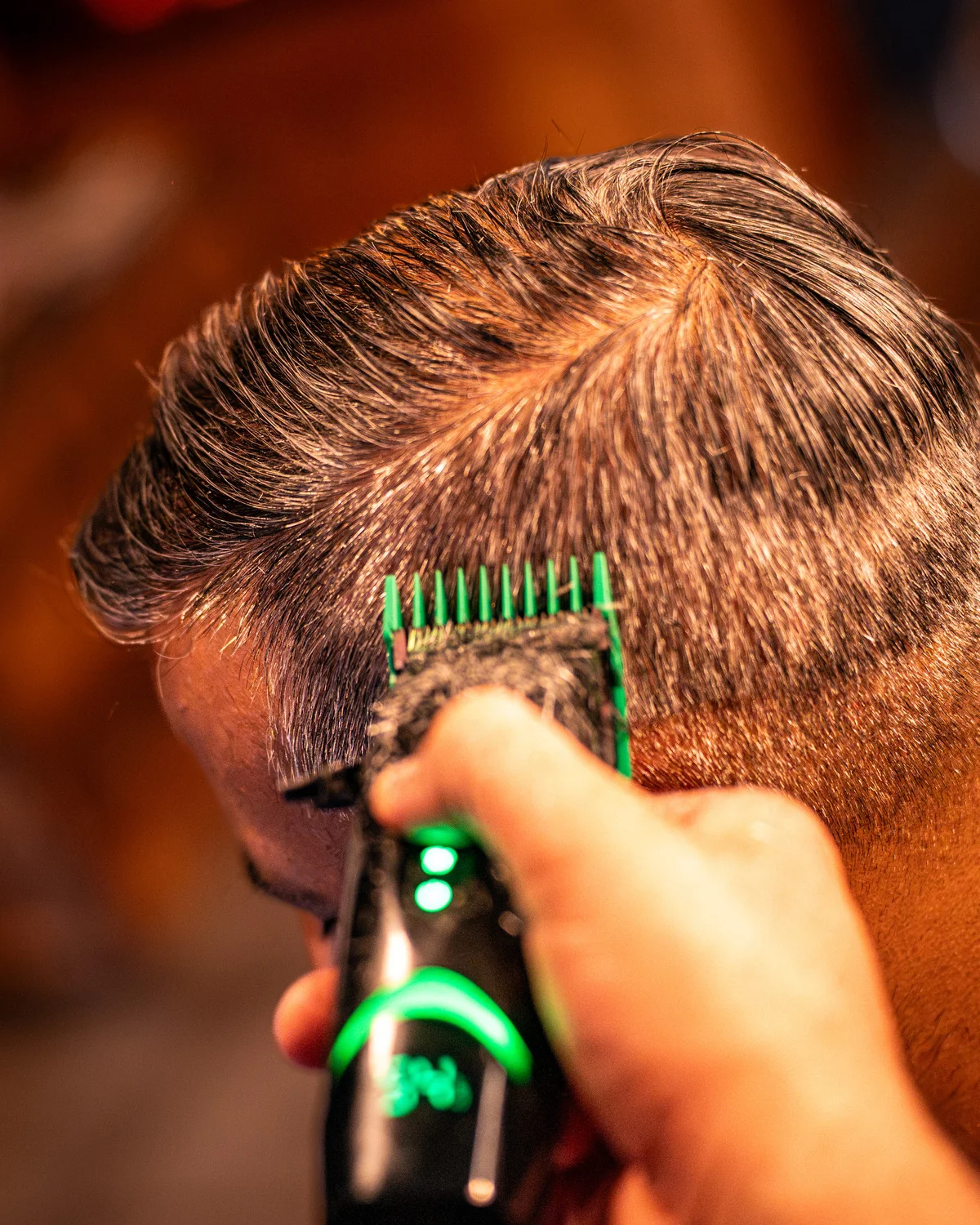
- A buzz or a crew cut. The least to go wrong. With almost no length, there is nothing for moisture to collapse or puff up. The tradeoff is that it grows out of its shape quickly, so it needs regular visits to stay sharp.
- A textured crop. Short sides and a textured top that is meant to look a little undone. When humidity roughs it up, it still looks deliberate. This is probably the most forgiving cut for a man who wants some length on top.
- A short taper with length on top. Clean around the ears and neckline, more length above. The trick is keeping the top short enough that it is not heavy, because weight is what flattens in humid air.
- A cut built around your curl or wave. If your hair is wavy or curly, the best cut works with the pattern instead of against it. More on that below.
The cuts that struggle are the ones that rely on a blow-dry to exist: a tall, smooth pompadour, a sleek side part on straight hair, or a long fringe that has to sit in one exact place. They can be done, but in August they need more product and more patience than most men want to give them before work.
If you are not sure which of these suits your hair, that is the conversation to have in the chair. Our Premium Haircut is $80 and 30 minutes, and the time is there so the barber can shape the cut to how you actually wear it.
Curly and wavy hair: stop fighting it
Curly and wavy hair has the hardest time in humidity, and most of the damage comes from trying to make it straight.
The American Academy of Dermatology has two warnings that apply directly. One is that “washing curly hair too often can leave it dry, frizzy, and hard to manage.” The other is that “heat and the sun’s harmful ultraviolet rays can dry out curly hair.” A Florida summer delivers plenty of both.
What helps:
- Wash less, condition more. Rinsing sweat out with water on the days in between is fine. Shampoo every day strips the hair and makes frizz worse.
- Stop rubbing it with a towel. The AAD recommends that you “wrap your hair with a towel or t-shirt to gently absorb the moisture” instead of rubbing it dry. On curly hair this alone makes a visible difference.
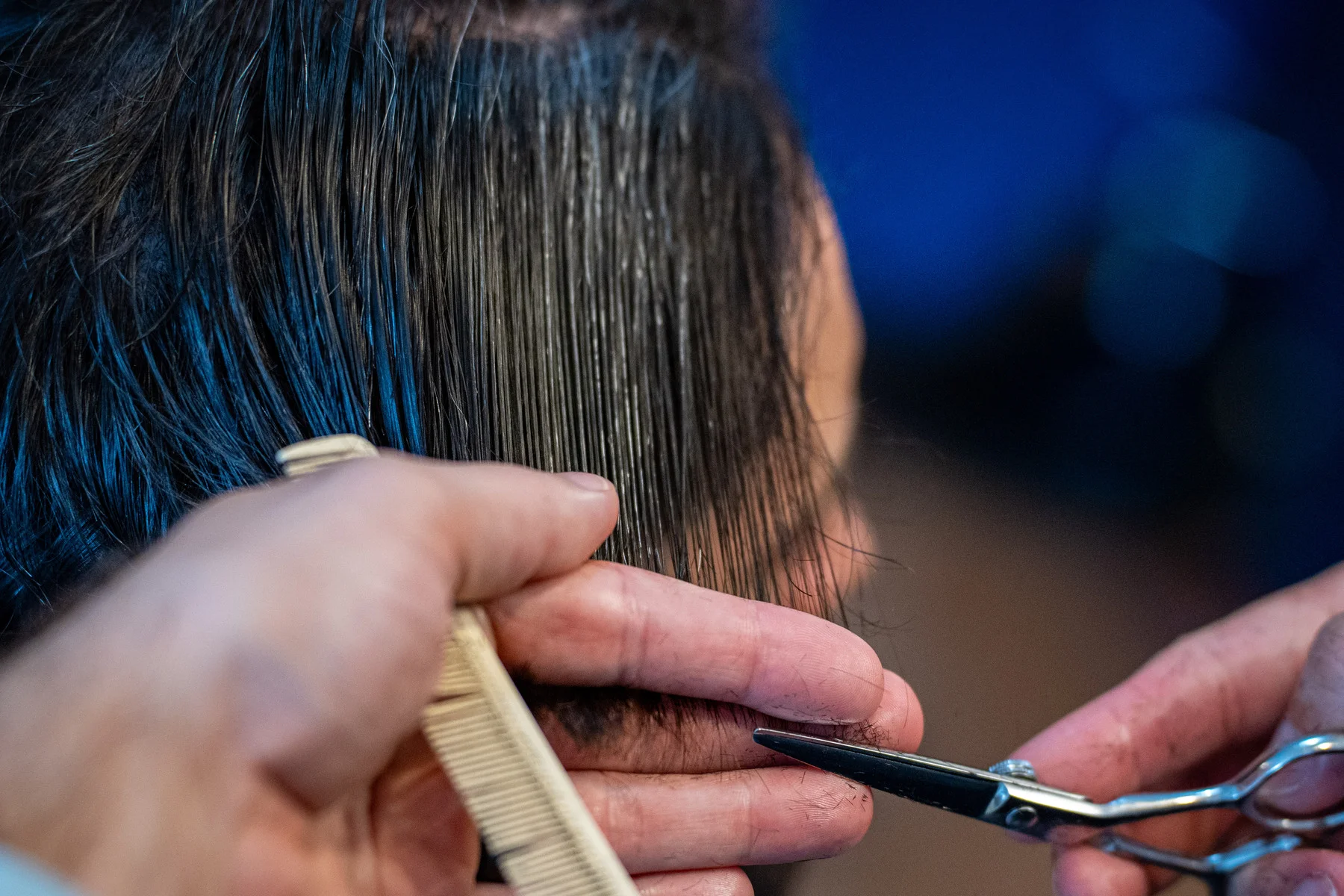
- Cut to the curl. A good cut for curly hair takes weight out in the right places so the curls sit evenly, rather than leaving a heavy, triangular shape that puffs out at the sides. Tell your barber you want it cut for how it dries naturally, not how it looks wet in the chair.
Go easy on heat and on product
Two habits make humidity worse, and most men have at least one of them.
The first is too much heat. Blasting the hair on high to force it flat leaves it drier and rougher, and the flat finish still does not survive the walk to the car. The AAD is clear that “no matter your hair type, excessive heat can cause damage,” and recommends “low or medium heat settings and a product to protect your hair from the heat.” If you blow-dry, dry it most of the way with a towel first, then finish on a lower setting.
The second is too much product. When a style starts to fall in the heat, the instinct is to add more. Heavy product on top of sweat leaves hair stringy by the afternoon, and you end up washing it out every night, which brings back the first problem. Start with a pea-sized amount, warm it in your hands, and work it in from the back. A matte finish usually looks better in humidity than a shiny one, because frizz on a matte style reads as texture.
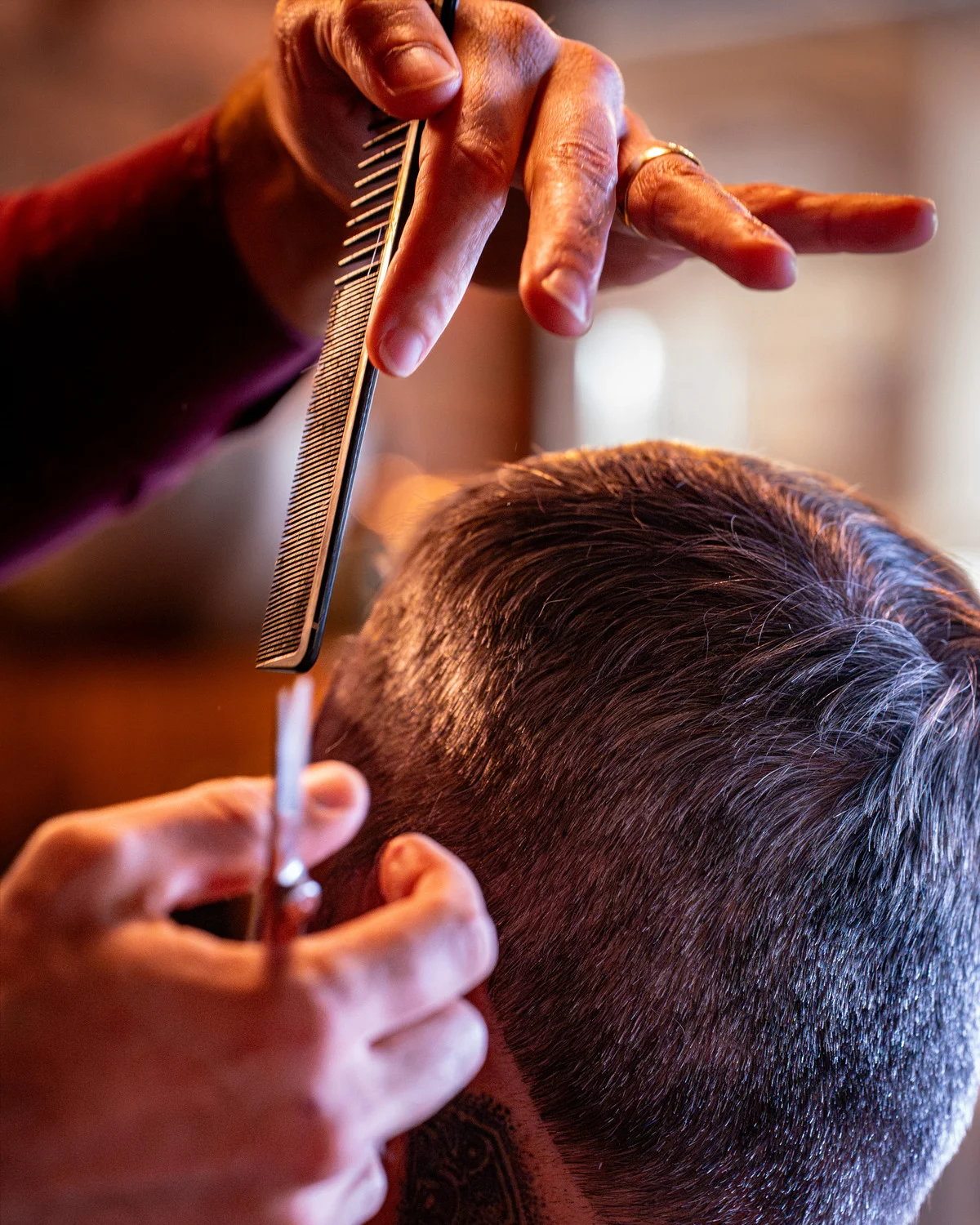
The rest is timing. Style your hair after the bathroom has cleared of steam, not in it, so you are not setting it in the most humid room in the house.
How often to come in, and what to tell your barber
Short cuts are the most humidity-proof, and they are also the ones that lose their shape fastest. A cut that looks crisp on day one can look shaggy around the ears and neckline within a few weeks, and a tired outline is what makes a short cut look messy in humid weather. If you wear it short, plan on coming in more often in summer than you do in winter.
The menu has two everyday options:
| Service | Price and time | What it includes |
|---|---|---|
| Traditional Haircut | $68, 30 min | The precision cut, a hot lather nape shave and line-up, a shampoo, and a blow-dry and style |
| Premium Haircut | $80, 30 min | All of that plus our organic scalp treatment, a hot stone scalp massage, a steam towel, and a scalp and shoulder massage |
When you sit down, three things help your barber choose the right cut for the climate:
- How long you spend on your hair in the morning. Be honest. A cut that needs ten minutes and a blow-dryer will not survive a man who gives it two.
- How much of your day is outside. Someone walking between air-conditioned offices needs a different cut from someone on a boat or a job site.
- What it does by the afternoon. “It goes flat on top by two o’clock” or “it puffs out at the sides” tells a barber more than a photo of how it looked on day one.
A photo still helps. Our guide to a first visit covers how to bring one and what to say.
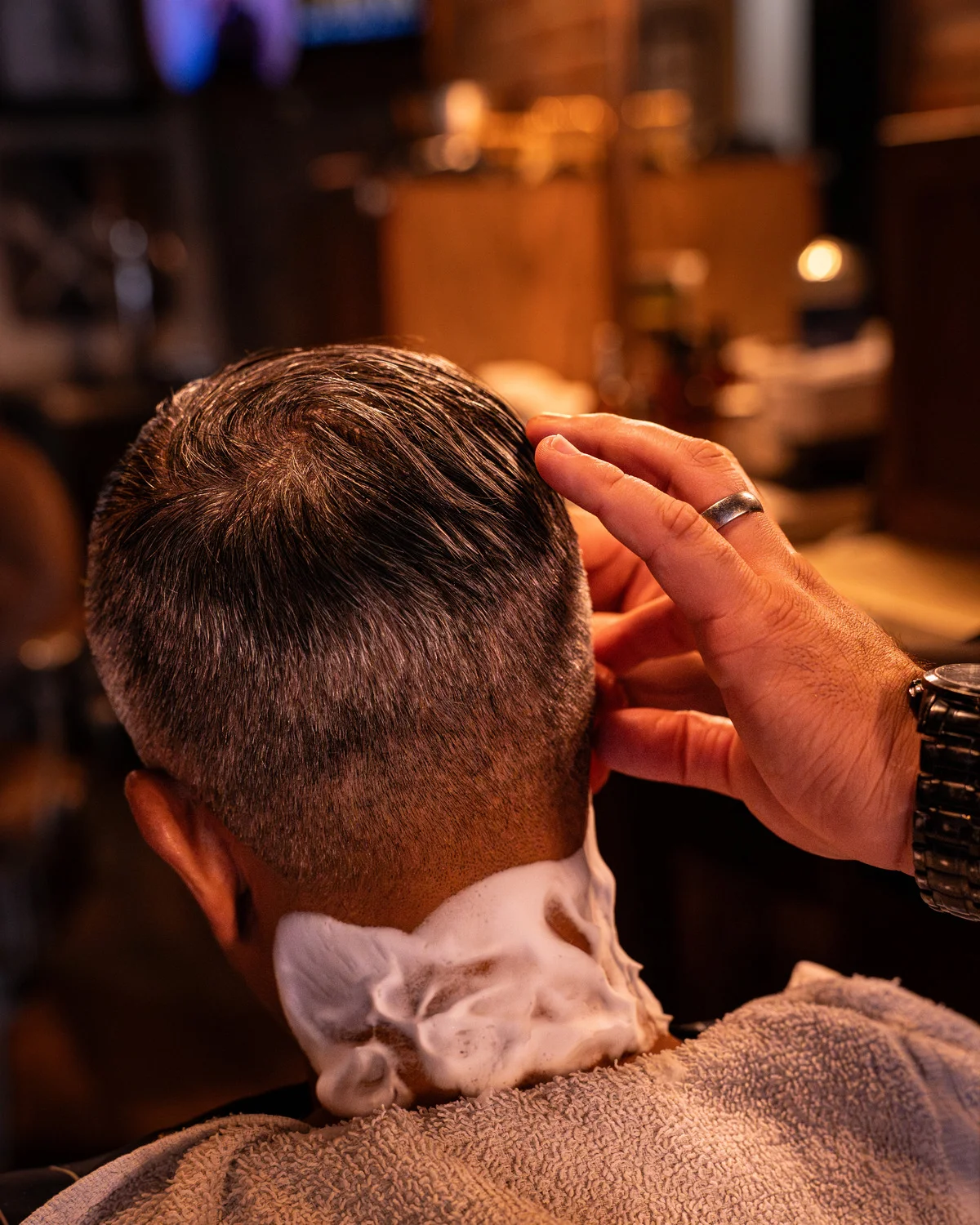
If you want the full afternoon off from the heat, the Premium Package puts the Premium Haircut, a straight razor shave and our facial into about 75 minutes for $180.
When you are ready for a cut that holds up to August, book a haircut on Main Street, or call (727) 330-7083 and tell us what your hair does by mid-afternoon. If you have a question first, send us a message.